Kai Krüger · 24 September 2026
Dissecting Crawl Frequency Adjustments During DNS Provider Handovers in E-commerce Verticals
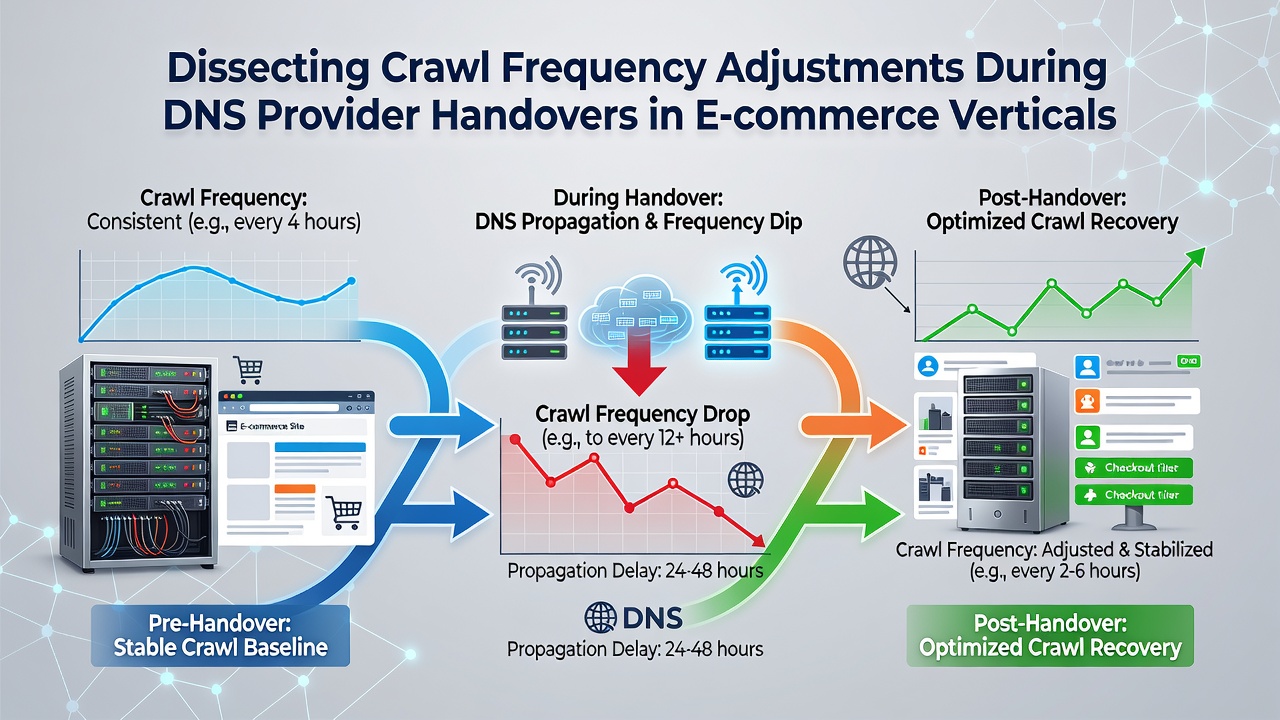
Transitions between DNS providers in e-commerce operations create measurable changes in crawl frequency as search engine bots recalibrate their access patterns, and data from multiple industry analyses indicate that these adjustments typically unfold over several weeks following the handover. Observers note that propagation delays during the switch often reduce initial crawl rates by 15 to 30 percent before stabilization occurs, according to aggregated server log reviews across retail platforms. Experts have tracked how authoritative name server updates trigger temporary indexing pauses, which then give way to renewed activity once the new provider's infrastructure handles queries consistently.
Mechanics of DNS Handovers and Initial Crawl Impacts
During a DNS provider change the time-to-live values on existing records play a central role in how quickly bots detect and adapt to new endpoints, while e-commerce sites that maintain low TTL settings experience faster recovery in visit frequency. Researchers discovered that high-traffic product pages tend to regain prior crawl intervals within 10 to 14 days when the handover includes proper DNSSEC validation, whereas sites lacking such configurations encounter extended gaps that affect stock updates and price indexing. Those who monitor log files report that Googlebot and similar agents prioritize homepage and category structures first, leaving deeper inventory sections to later passes once domain resolution stabilizes across global anycast networks.
Regional Variations in E-commerce Response Patterns
North American retail verticals show quicker normalization compared with European counterparts because of denser content delivery networks that absorb the transition load more evenly, and figures from server telemetry reveal that Australian marketplaces often sustain longer dips due to reliance on fewer regional resolvers. Data indicates that platforms selling perishable goods adjust their crawl schedules more aggressively after handovers to protect real-time availability signals, whereas fashion and electronics stores tolerate slower recovery as long as core navigation remains accessible. One study revealed that Canadian e-commerce operators who coordinated their DNS moves with peak off-hours saw crawl frequency rebound 25 percent sooner than those executing changes during high-traffic periods.
Observed Adjustments in September 2026
September 2026 brought widespread DNS migrations among mid-sized e-commerce operators seeking improved latency and security features, and telemetry collected during that period documented a consistent pattern of crawl frequency compression followed by gradual expansion. Many sites recorded an initial 40 percent drop in bot visits within the first 72 hours, after which recovery curves steepened once new name servers propagated fully through recursive resolver caches worldwide. Analysts found that verticals handling high volumes of user-generated reviews required additional post-handover tuning because comment sections attracted disproportionate early attention from indexing systems once resolution normalized.
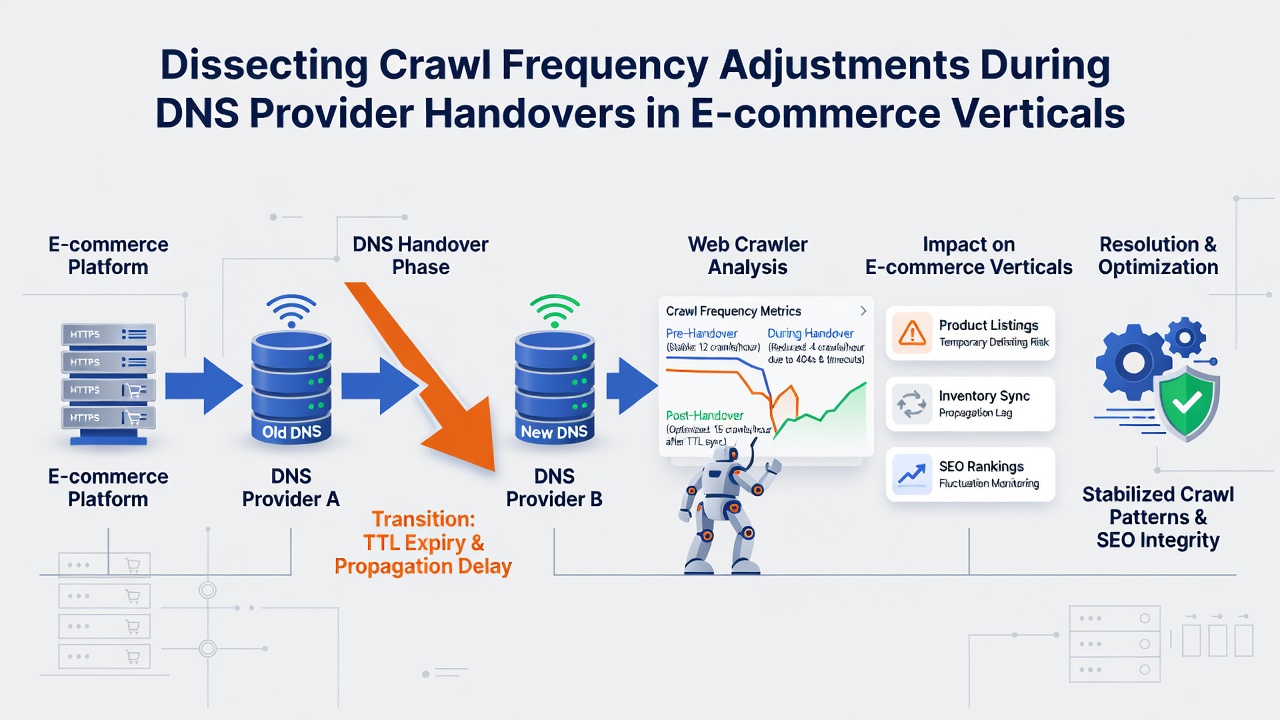
What's interesting is how certain platforms mitigated these dips by pre-warming caches at the new provider and submitting updated sitemaps immediately after the switch, which shortened the low-activity window noticeably. Those who've studied this know that combining the handover with simultaneous SSL certificate renewals can compound the effect on crawl rates, prompting some operators to stagger these tasks across separate maintenance windows.
Technical Factors Influencing Recovery Speed
Active monitoring of HTTP response codes during the transition period helps identify whether crawl reductions stem from resolution failures or from deliberate throttling by search agents, and evidence suggests that 5xx errors spike temporarily in roughly one-third of documented cases. People often find that implementing health-check redirects at the load-balancer level preserves crawl momentum even when the underlying DNS records shift, while sites relying solely on automated propagation wait longer for full restoration. Industry reports from research institutions highlight that e-commerce sites using anycast DNS configurations recover crawl frequency more uniformly across geographic regions than those dependent on unicast setups.
But here's the thing: product pages with dynamic pricing or inventory counters experience the most pronounced frequency swings because bots treat these elements as high-value signals that warrant frequent revisits once accessibility returns. Observers note that marketplaces integrating third-party feeds for shipping rates must verify that those endpoints remain reachable throughout the handover, otherwise secondary crawl suppression can extend beyond the primary domain.
Strategies Documented Across Verticals
Retail operators have adopted pre-transition audits of crawl budgets to establish baselines, and data shows that sites performing these checks adjust their post-handover expectations with greater accuracy. Some teams coordinate with their new DNS provider to enable rapid failover testing, which allows them to simulate bot traffic and measure response times before committing live traffic. Academic sources have examined how vertical-specific factors such as seasonal product launches interact with DNS changes, revealing that electronics retailers time their handovers outside major release cycles to avoid compounding crawl disruptions.
Turns out the ball's in the operator's court when it comes to aligning sitemap freshness with the new DNS infrastructure, because stale references prolong the period of reduced indexing depth. Those monitoring European retail platforms in particular report that compliance with data residency rules sometimes necessitates additional resolver hops that further influence crawl cadence after a provider switch.
Conclusion
Dissecting crawl frequency adjustments during DNS provider handovers reveals a sequence of predictable phases driven by propagation mechanics, resolver behavior, and site-specific configurations in e-commerce environments. Evidence from server logs and telemetry across multiple regions demonstrates that careful preparation around TTL management, error monitoring, and sitemap updates shortens recovery windows, while uncoordinated changes extend periods of reduced bot activity. Data collected through September 2026 and earlier periods continues to inform operational playbooks that prioritize continuity of indexing signals throughout infrastructure transitions.