Kai Krüger · 22 October 2026
How Protocol Shifts Influence Discovery Patterns in Community Driven Platforms
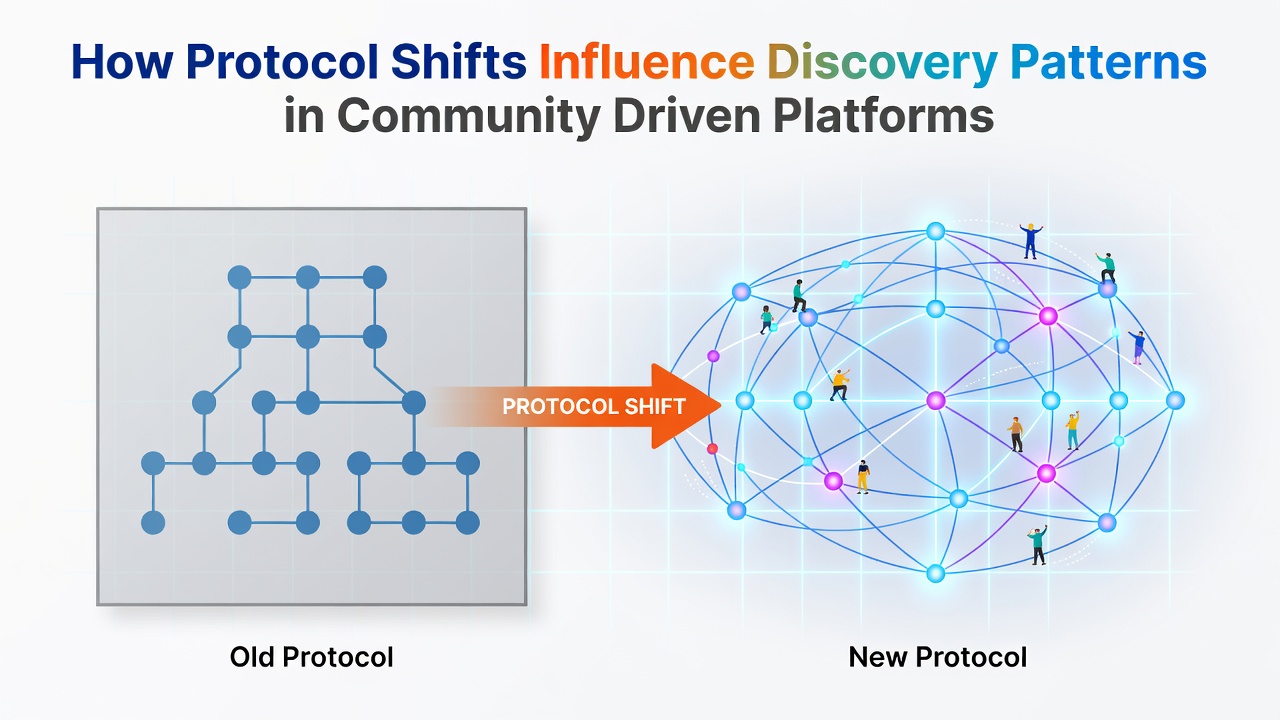
Protocol shifts in community driven platforms refer to changes in the technical rules that govern data exchange, user authentication, and content distribution, and these adjustments alter how participants locate groups, threads, and resources. Observers note that platforms relying on open or federated standards experience different discovery outcomes compared with those using proprietary systems, because the underlying communication methods determine visibility across networks.
Core Mechanisms Behind Protocol Changes
Community platforms operate through defined sets of rules for sending and receiving information, and when those rules update, indexing processes, recommendation algorithms, and cross-site linking adapt accordingly. Researchers have documented cases where migration from older request-response models to persistent connection protocols increased real-time content surfacing, while transitions toward encrypted transport layers modified crawler access patterns. Data from network monitoring services indicate that such updates often coincide with measurable changes in the rate at which new users encounter existing discussions.
Impact on Content Visibility and Search Pathways
Discovery patterns shift when protocols alter metadata handling or require new authentication tokens for external tools. Studies conducted by academic teams at institutions across North America and Europe show that platforms adopting structured data schemas under revised protocols frequently see improved indexing by external search engines, whereas platforms that restrict metadata fields observe reduced external referrals. In October 2026, several federated discussion networks completed upgrades to ActivityPub extensions that standardized reply threading, and traffic logs from those networks recorded higher cross-instance discovery rates within the first weeks after deployment.
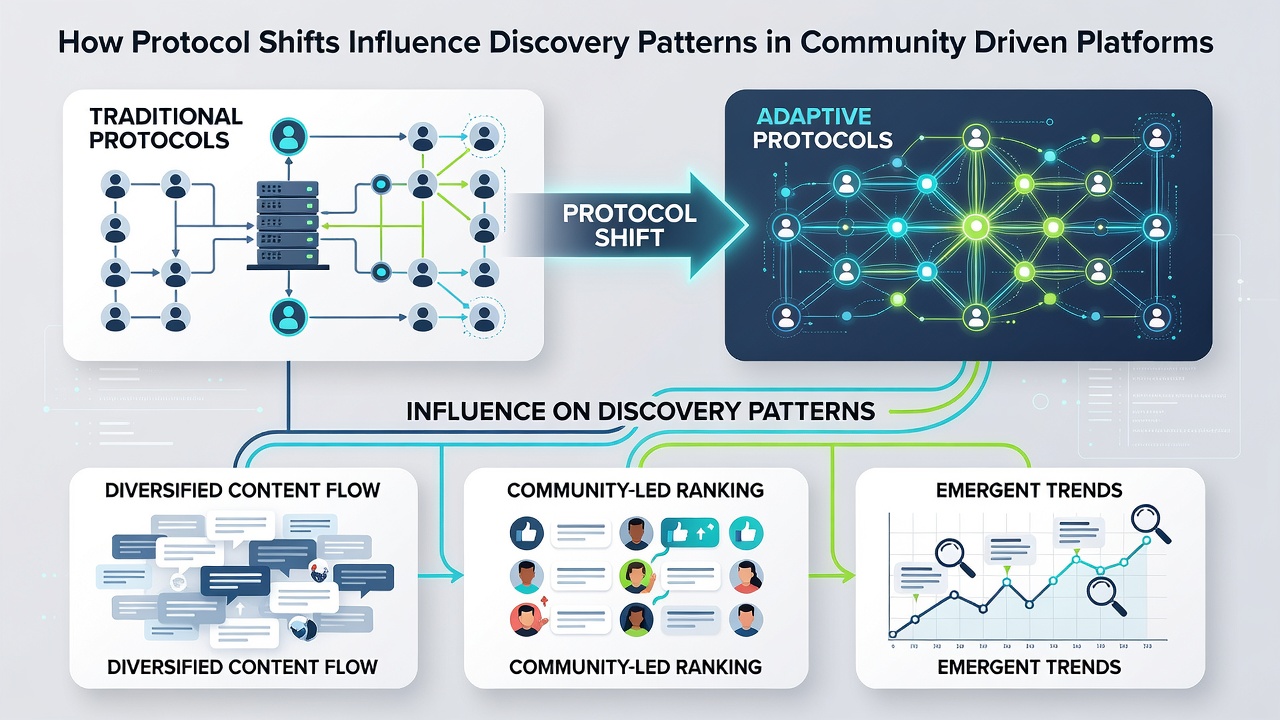
External applications that aggregate community content must revise their parsing logic after protocol updates, and delays in those revisions temporarily suppress visibility for affected communities. Figures released by the Canadian Internet Policy and Public Interest Clinic reveal that aggregator downtime following major protocol releases averaged fourteen days in recent cycles, during which internal search functions became the primary discovery route for participants. Those who manage community platforms therefore schedule compatibility testing windows to limit gaps in external exposure.
Case Examples from Recent Transitions
One documented instance involved a large open-source project forum that moved from a custom REST endpoint structure to a GraphQL-based protocol in mid-2025, and subsequent analytics showed a redistribution of traffic sources away from direct links toward topic-based recommendations generated inside the platform. Another example comes from regional hobbyist networks that adopted newer WebSocket standards for live updates, after which participant reports indicated faster location of active threads through integrated notification systems. Industry reports compiled by the Internet Society highlight that each of these shifts produced distinct effects on how newcomers first encountered content clusters.
Measurement Approaches and Data Collection
Analysts track discovery changes through referral logs, internal search query volumes, and cross-platform mention counts, and they compare periods before and after protocol deployments. Research groups at the University of Melbourne have published methodologies that isolate protocol-related variables from seasonal traffic fluctuations, allowing clearer attribution of visibility shifts. These methods rely on timestamped API responses and server header analysis to establish causal sequences between protocol activation and altered discovery metrics.
Conclusion
Protocol shifts continue to reshape discovery patterns because they directly control the channels through which community platforms exchange and surface information. Continued monitoring by regulatory bodies and research organizations across multiple regions provides the data needed to understand these effects, and platform operators use such evidence to plan transitions that maintain consistent access for both existing members and new participants.